Saturday, October 8, 2022

Building a surprise gift watch for Roberto

This year we had another addition to the family when my stepdaughter Lauren married Roberto.  As a "welcome to the family" gift for him, I decided to build a custom watch.  According to Lauren, he tends to wear larger, bolder watches.  In this photo I see an Invicta Russian Diver automatic, a Rolex Submariner clone, and a Sanwood quartz (Aliexpress brand).

So I wanted to choose a design that would be big on the wrist but with a classic heritage.  The selection of replica watch style parts is limited to a few styles, (Rolex, Omega, IWC, and Panerai come to mind). I wanted to base it on a Unitas 6497/6498 movement, and that limited it to IWC and Panerai with larger cases.

I had seen a article about how large watches, particularly Panerai, had been popularized by Sylvester Stallone in the 1990s, and I thought it would be fun to see what model(s) he wore and whether I could replicate it. Turns out he wore a Panerai Luminor during filming of the 1996 movie "Daylight" (link), and it boosted the trend toward big (44 mm and larger) watch cases.


Panerai started building the "Sly Tech" series of watches which now sell for $25k-40k on the used market (see this one).  This 5218-205A model served as the target for my design. This model is not exactly like the one in Daylight, but I prefer it because it has a seconds hand in the sub-dial at 9:00. (By the way, the actual watch Stallone wore in the movie sold for $214,200 at auction in 2020.)


I found a nice copy of the Panerai Luminor watch case with a sapphire (very hard to scratch or break) crystal, a display back, and water resistant seals.  Panerai was asked in 1935 to make watches for the Italian Navy, which is why these models have dive watch features. Here's an article with the history of Panerai Luminor if you are interested.

The most distinctive feature of the Luminor case is the locking crown guard, which is designed to compress the crown (the thing you turn) against the case with a rubber O-ring in between to seal out any water.  It also ensures that the crown cannot be broken off by impact or accidentally pulled out to the setting position, which could result in the time changing.


The case back has a large display window to show off the design of the movement and to see the gold balance wheel moving back and forth exactly 3 times per second.  You can also watch the wheels (gears) move when the watch is wound. 


Anyway, the next step is to source the parts and tools.  Here's what I used:

Parts:

  1. Watch case - Panerai copy with sapphire crystal and display back, designed for the Unitas 6497/6498 movement and clones like the Seagull ST36.  The case has O-rings for the case back and crown to give good water resistance.
  2. Movement: Unitas 6497/6498 manual winding mechanical clone (ST36)
  3. Dial & Hands - Panerai replicas with black dial and orange/yellow numerals. I decided to deviate from the original design by including a small seconds sub-dial at 9:00 so it is obvious that it's running.  The hands are white with black border matching the original design (with the addition of the small seconds hand).
  4. Strap - The original came with a sharkskin leather strap with buckle. I found a store online in the Netherlands that sells one nearly identical to the original.
  5. Bonus strap - I added an orange silicone strap for an optional sporty look.
  6. Movement clamps - The movement I found did not appear to come with clamps and screws to secure the movement to the case, so I ordered 5 sets (need only 2 sets).
  7. Winding stems - It's easy to snap a stem with the Panerai style folding crown lock if it's not cut to exactly the right length.  Turns out I did not need extras.
  8. Gift box - A gift box is great for storage and to make it a proper gift.

New tools in addition to my standard watchmaking tools:

  1. Case back wrench - This is a special opener for 12-sided Panerai style case backs.  When I fixed a friend's Panerai clone watch I used a mini bench vise to grab the flats of the case back, but I found an opener cheap on eBay.  Unfortunately, this one was not able to fit a the 40mm flats on the case back, so I'm ordering a special tool...
  2. Panerai 40mm case opener - This tool makes it easy to screw/unscrew the case back.  I should have just bought this one in the first place.
Here's a photo of my watchmaker bench.


Nearly all of the parts were ordered from Asia and Europe and arrived within 15 days. The movement was first to arrive which was perfect because I wanted to test and adjust the timing.  The Swiss Unitas 6497 manual winding movement was originally built in the 1950s for Panerai.  It is copied now by several manufacturers, and the version I chose is one like used by Panerai with extra decoration -- special machining to catch the light, plus blued screw heads, and a swan-neck regulator.  

None of that makes it tell time better, but it looks cool through the display back. This version of the 6497 is very much like what Panerai used in the classic dive watches.  The first thing I did was put it on the Timegrapher, the instrument used to measure mechanical watch movements.


Out of the box it ran very strong and just a little fast at + 8.5 seconds per day.  That is about as good as it gets with this movement.  I wound it fully and let it run down until it was erratic, and it lasted about 52 hours.  The idea is that you wind a manual watch every morning when you put it on, and set the time if needed.

The black dial has orange numerals that glow green in the dark.  Seconds are counted on the small sub-dial at the 9 o'clock position. The simplicity of the dial layout was designed for high visibility in the dark and/or underwater.  The dial is then fitted to the movement and the three hands pressed onto the posts using a hand press.


After fitting the hands I moved the hands through 12 hours to ensure they do not physically interfere with each other during rotation.  Then the movement-dial-hands assembly is fitted into the case and secured by case clamps and screws (red circles).


I temporarily screwed in the case back and placed it on the Timegrapher to see if it was still in adjustment.  It was still running great at +2 seconds per day, so time to finish casing it.

Next, the winding stem (the shaft that the crown screws onto) has to be trimmed to the correct length.  I probably spent 2 hours just measuring, calculating, cutting, and filing the stem to get the right length.


Then I installed the crown guard for the last time, lubricated the O-rings with silicone, and screwed on the case back.  Before finally closing the case I cleaned both crystals with lens cleaner to remove any dust, smudges or hairs that might be stuck to either crystal.  Then I fitted the silicone strap and took it for a test drive.  (The orange band is a bonus to give it a second more rugged and sporty look.  Amazon has an infinite variety of straps.  Just look for a 24mm lug width strap. It tapers to 22mm at the buckle.


After I build a watch I always wear it for a few days to make sure nothing goes wrong, like a hand falls off inside and floats around the dial.  Or it just stops, or keeps bad time.  I like to set it in the morning then check it against my radio-calibrated clock for accuracy.


Still right on time at 8:35pm!

While waiting for the last items to arrive, I rented the Daylight movie on Prime to see the watch in action and snapped a of pic from the screen:


It was an OK movie, pretty good special effects and lots of explosions, car wrecks, cave-ins, and Stallone saving the day.

And here is a final shot of the completed watch with the supple sharkskin strap.  I like it so much I'm going to make one for me with a different dial and strap.

Completed watch


Roberto with his Christmas gift!


Monday, April 6, 2020

Repairing a Panerai Replica

Al, a friend and coworker had a "Panerai" replica he bought somewhere.  He was having a problem with the setting mechanism, and he had asked me if I could fix it.  While trying to do that I broke the winding stem off in crown threads.  Though it was an inexpensive watch, it was no longer usable, and I felt bad for Al and wanted to make it right. This watch has the same features as the Panerai Luminor Power Reserve PAM 090 model, but the Swiss maker was never produced with a white dial.


 In the photo above, one can see the gap between the crown and stem where it broke.

The repair presented three main challenges I had not faced before: 1) how to remove a Panerai-style case back which has a 12-sided gripping surface around the perimeter, 2) how to find a replacement winding stem, and 3) how to find a compatible crown or alternatively, remove the broken stem thread section from the threaded crown hole.

Winding stems are specific to movement design or "caliber".  This movement is of Asian manufacture but had no markings to lead to a parts catalog or compatible part.  The unique feature of the movement was the 4:30 power reserve subdial.  After massive googling and brute-force visual scanning of hundreds of online images, I found the correct movement model, the ST/TY2530 shown here.
Allwatchparts.com sells the whole movement for $42.95, but I only needed the winding stem (below).  I was able to order just the stem from Otto Frei for just $4.00. 

To open the case back, I could have purchased a special tool from eBay for about $30, but with no other use for the tool, that seemed like a bad investment.  I was able to use a small bench top vise to grab opposite flats of the case back to loosen it.

Despite lots more googling, I was unable to find a replacement crown, so I started looking for a way to remove a broken stem.  

I found this Omega forum post detailing how a broken stem can be essentially dissolved out of a crown by soaking it in a solution of alum and water.  The crown is stainless steel and corrosion resistant, but the mild steel stem is not.  There was nothing to lose except a couple of bucks for a can of alum (used for home canning) and time.  I soaked it in a Pyrex dish and checked it every day to see if there was any sign of it corroding away.
After about 4 days, the remainder of the stem had turned black, and I used a small screwdriver to scrape out the debris and I was in business!

From there, I was able to give everything a good cleaning, replace the movement in the case, adjust and regulate the timing and get it back to Al for more wrist time.


Saturday, November 23, 2019

Building a "New Dad" gift watch

Building a watch as a surprise gift 

In the last year I have been building watches from parts.  So far I have built:
  • March 2019: A vintage style pilot watch based on a Swiss ETA 2824-2 automatic movement
  • April 2019: A replica Rolex Submariner also based on the ETA 2824-2 automatic


  • May 2019: A replica Rolex Day-Date with a Sellita SW220-1 automatic movement


I may blog about the first three just for fun later, but in this blog I will talk about a new gift watch.

My eldest daughter and her husband had their first child, Lily, this year on October 15.  Lily is Tara's first, my first grandchild, and my dad's first great-grandchild, making her the first child of her generation on the Reprogle side.  As a result Tara's pregnancy has attracted a lot of attention.

Parenthood in general, and fatherhood in particular, is less highly valued by some these days.  I strongly believe fathers play a crucial role in raising children, and I wanted to express that belief with a gift to encourage my son-in-law to be the best father he can be for Lily.  Giving a watch also symbolizes how precious will be the short time he will spend with her as a child.

Planning for building a watch from parts starts with choosing the style of watch, whether sports watch like the Submariner or chronograph or a dress watch like the Day-Date.  I wanted the gift to be a surprise, which makes it more difficult to choose a style, so I worked with Tara on the design choices.  We decided on a classic design with a gold case and a vintage manual-wind movement, the Swiss Unitas/ETA 6497/6498.

The Unitas 6497/6498 was first produced in the 1950s as a relatively compact pocket watch movement. As a wristwatch movement, however, it is a large diameter at 36.6 mm.  The smallest cases are in the 43-48 mm range, and are usually one of three categories, a classic dress style, an aviator style, or a Panerai style dive watch. Tara strongly preferred a classic-style dress watch in gold with a roman-numeral dial.  

Finding a suitable movement was a priority, and I wanted an authentic Swiss Unitas/ETA movement with some decoration to give Matt (and others) something to admire as a piece of art and craftsmanship.  I was excited to find someone selling the movement, dial, and hands from a 1960s-era Baylor pocket watch (below left).  The 6498 was made in varying levels of finish from plain steel to gold to fully decorated, and the one I purchased features a hammered gold finish (below left).


With the movement chosen, then next step was to select the case. Working with Tara I chose this 43 mm case with an 18k gold-plated finish, a display back to show off the movement, and a sapphire crystal to help prevent breakage or scratches.  The crown is an "onion" or "pumpkin" shape which is a classic style to match the roman numeral dial.  I used the original Baylor hands, which are Louis XIV style. 


The eBay seller listed the 6498 movement as "running", which it did indeed do when I first received it.  Since it was at least 45 years old, I assumed it needed cleaning, lubrication, and a new mainspring.  Also, when installing a movement in a different case, you have to allow that the winding stem will need to be sized to a different length, so I ordered extra 6498 stems.

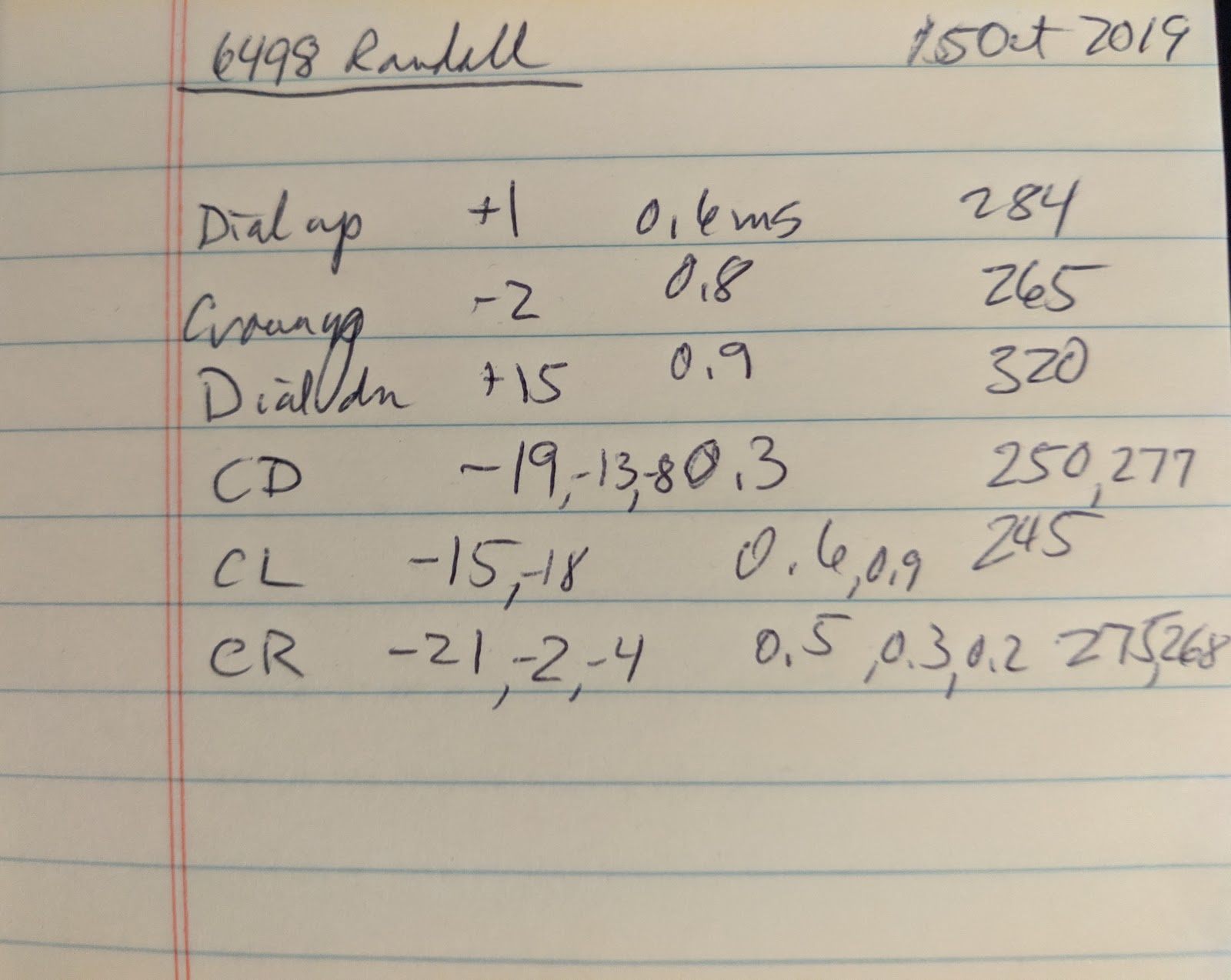
So the first step is the disassemble the movement for cleaning.  The 6498 is relatively simple and large as watch movements go.  When taking apart a movement I take photos along the way to help recall the positions of parts, screws, and springs during reassembly. I make notes on legal pad that doubles as a work surface.

Starting with the movement side, first part out is the balance assembly, then the train bridge and the ratchet wheel.

 Then the winding "click" (ratchet), click spring, winding wheel, and three wheels.  (In the watch world gears are called "wheels".)

After removing some of the movement side parts, I flipped it over to work on the dial side parts.  Most of the winding and setting mechanism is on the dial side.

Flipping back to the movement side, I removed out the barrel bridge and center wheel to expose the mainspring barrel, the silvery round part at 6:00.  This contains the mainspring that stores the energy to drive the mechanism.


Opened and unwound one can tell this spring has lost much of its capacity by taking a set.

The parts went into the ultrasonic cleaner for several minutes.

They came out of the cleaner shiny and ready to reassemble.

I didn't get a photo of installing the new mainspring, mostly because I didn't have the right size spring insertion tool and had to hand-wind the new mainspring into the barrel, which I had never done before.

It was incredibly satisfying to put it all back together, align the balance wheel, give it a couple of turns on the crown to wind the spring and have the movement jump to life, kind of like doing CPR on a stunned bird.

Once the movement is running, it's time to check the timing and adjust or regulate it.  I use software on the laptop with a spare PC microphone that listens to the ticking of the movement as the balance spins back and forth and measures the speed to estimate the rate accuracy in +/- seconds per day.  A good number is something less than +/- 20s/d for a movement like this.

I was able to adjust it to +7 s/d in one position, which is very good, certainly for a 50 year old movement.

The timing was measured with the movement in 6 orientations.  This one had quite a bit of rate deviation in the various positions (below), but there was not much I could do to eliminate it.  It's probably due to wear from being old, like my knees.  

The original Baylor dial (left photo below, top) was too small to properly fit the new watch case, so I ordered a vintage-looking roman dial (left photo, bottom) with nice sunburst pattern on the seconds subdial.  The red XII is a classic design detail from Rolex military watches from WWI (below right).


Second Time Around Vintage Watch: 1910's Vintage Military ...


 The movement is mounted in the case, then the stem is cut to the right length, filed, and checked.


The crown is screwed onto the stem threads and secured with Loctite to help prevent being unscrewed if the crown is turned backwards.

Since the timing on the tester was inconsistent, I put it on a temporary nylon strap and wore it for a few days, checking the timing 2-3 times per day (right).  It tended to run a bit fast, gaining less than one minute per day.  I was able to adjust out some of the error, but even one minute per day is livable.

While I was testing it on the wrist, the watch became an icebreaker when I was invited to my DC client's home for dinner.  His 90 year old father was a doctor and a watch collector and immediately noticed the watch, said it was beautiful, and asked the brand.  I replied that I had built it, which led to a conversation about my hobby.


The custom-made strap is from EShandcrafted, and Australian Etsy seller.  A wood gift box with gold tone hinges completes the gift. 


I set the watch to 9:27 to match the time that Lillian Josephine Randall was born on October 15, 2019.


Monday, April 4, 2016

1897 Elgin Pocket Watch Restoration

Part 1 - The Patient's Story:

My mother had this vintage pocket watch in a display globe on the fireplace mantle.  This watch was owned by my grandfather John Heisler (1913-1988) of Etna Green, Indiana.  He was a hardworking guy, a mason and bricklayer with a wicked dry sense of humor.  Here's a pic (left) from Christmas 1962 with my grandmother Fawn Heisler (1915-2012).


Here's a photo (right) of me the same year sitting on Elizabeth Taylor's lap.

Wait... that's not Liz, that's my mother Jo Reprogle, known by all as the most gracious and beloved wife, mother, and grandmother anywhere.


Back to Grandpa's watch.  At first glance we can see the label says "Elgin Natl.Watch Co." Also, that it has "issues": the minute and second hands are gone, the hour hand is bent, and the case exterior shows major wear in the finish, whatever it once was, probably rolled gold plate.  On the bright side, the crystal is good with a few scratches, and best of all the dial is absolutely pristine, clear white with few small blemishes and intact markings.


 While the general design is still visible, the case back is so worn that the engraved patterns are completely smooth to the touch.


Unscrewing the case back we see "PAT.APR.22.1879 Fahys MONTAUK 4940925".  Fahys is the mark of the case manufacturer Joseph Fahys and Co.  The patent date is a clue as to the age of the piece, but  we'll look at the movement serial number to hopefully get the exact date.


Turning to the movement, we can see the two main bridges with some fancy engraving along with a serial number 7024902 at 10 o'clock on the train bridge.  Per Pocket Watch Site, this watch was manufactured sometime in 1897!


Besides the watch itself, Mom had a box of parts that once occupied the interior of our patient in such condition to bring tears to a watchmaker's eye, especially that stretched-out hairspring <sniffle...>. So we have balance cock, wheel, the mainspring barrel (lower right), and a winding wheel (upper right).


Dr. Matt has declared this patient unable to restore from this meager supply of parts.   Our patient is 119 years old and in need of a multiple-organ transplant.

Part 2 - The Donor
Enter our donor, fresh from an eBay auction for $92.  Seller says the movement is complete, but we can see cosmetically it's a mixed bag.  The crystal is missing, the dial is cracked and blemished, but it has all three hands.  In other words, it has everything GrandpaWatch does not (hands and movement), so with a little luck we can keep the entire case and dial and much of the movement including the main plate, bridges, setting/winding works, and some of the wheels.

Here's the Donor watch with the case back removed.  Everybody ooh and aah over the engraved balance cock, the regulator (F/S), and especially the blued steel screws. Donor's serial number 3261642 puts date of manufacture in 1888.


Watchmakers used blue screws not for the aesthetics but because that is the color they turned during heat treatment for hardness.  Yet even now high-end watch makers, especially German brands like Lange, like to use blued screws on some intricate movements like this Glashutte Senator Rattrapante, which goes for about $40,000 in gold.

Back to DonorWatch, the hands are good, though the small second hand is a little bent.  Hands are removed with a special tool called, you guessed it, a hand remover.  This is a prerequisite to taking apart the movement, as well as just being a good idea to protect them from damage.  Same is true for the balance assembly, which is exposed and one of the more delicate parts.  We can also see that the dial is cracked and blemished.


The hands are also blued and a bit tarnished, but definitely better than nothing.  Some cleaning may restore some lustre.


Removing the train bridge exposes the wheels (gears) and shows the mainspring barrel peeking out from the barrel bridge here at top.  At this point, I was trying to get the barrel bridge out from between the case and the main plate, and as I wiggled it, the barrel teeth disengaged and disgorged all its springwound energy in about 0.1 seconds, throwing the seconds wheel on the bench and the escape wheel (bottom) onto the floor.


At first I was really afraid I had lost other parts such as the escape thingy (anchor), but after crawling around with my nose in the carpet I went back and looked at the train bridge, and there it was safe on the back side. WHEW.


In retrospect, the next step should have come before dorking with the barrel and spraying parts all over.  I removed the screw holding the movement in the case then found how to separate the dial from the movement.  Three small set screws in the edge of the movement hold the dial pins.


The dial itself is enamel (see Pocket Watch Dials 101 for all you want to know) made from firing finely ground glass powder (enamel) onto a metal substrate.  Only high end watchmakers still use this technique to make dials today.  And I thought enamel was just a kind of paint that comes in tiny square bottles.

Under the dial is the winding and setting mechanism.  I am not sure if this watch has been serviced in more than a century, and the only reason it is not running today (besides me taking it apart) is the accumulated gunk and spoo throughout the movement.  DonorWatch is now disassembled, including the winding and setting mechanism, and it's time for a break.


Next steps:

  1. Disassemble GrandpaWatch and see which parts can be used. Take special care with the dial and crystal.
  2. Thoroughly clean all parts to be used, including the mainspring. Winding the mainspring into the barrel will be a challenge.
  3. Reassemble and lubricate GrandpaWatch movement with transplanted parts.
  4. Get the movement running and regulate timing.
  5. Clean the case and reassemble.
  6. ...?